Andres Laszlo vs. Ernest Hemingway
In the 1950s, the Spanish press ranked them as peers. In private, they were something far more volatile. This is the archive of a literary “frenemyship” that spanned decades, continents, and the secret history of 20th-century cinema.
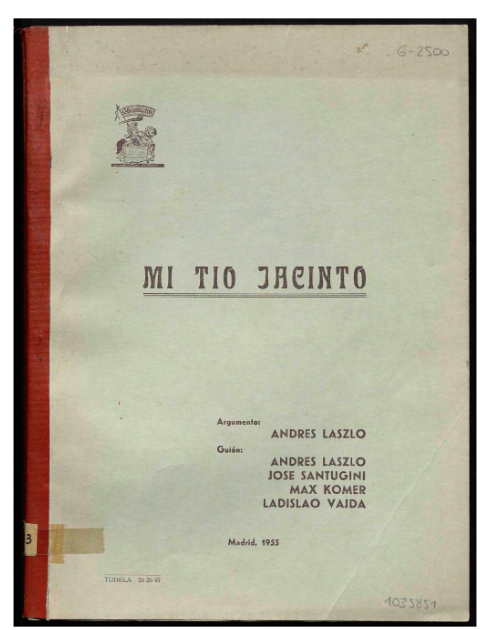
The Boy in Jacinto: My father’s greatest cinematic success, Mi Tío Jacinto (Berlin Film Festival, 1956), was born from a moment of profound personal irony. On the advice of Ernest Hemingway—a man my father both respected and deeply resented—a young boy was written into the story of a washed-up bullfighter. To my father’s lasting chagrin, Hemingway was right: the change made the story a masterpiece. I was that boy.
The 1948 Mystery: The connection gets deeper than a single film. To understand the Laszlo-Hemingway-Vajda triangle, you have to look back to the 1948 Academy Awards. Strange anomalies in the records suggest a hidden collaboration—or a hidden rivalry—that has remained off the books for nearly eighty years.
The Displaced Titan: While the “American Machine” spent millions immortalizing Hemingway, Andrés Laszlo Sr.—a man of four nations and none—was left to the shadows of history. He was the “Shadow” to Hemingway’s “Sun,” an intellectual duelist who was refused the status of anything more than a footnote.
One reason for this is that Hemingway had a nation set on keeping his memory alive, whereas my father had none. I, Andrés Laszlo Jr., have taken it upon myself to change this. To do so, I have curated four primary cinematic projects for revival:
- The Challenge – Mi Tío Jacinto reimagined.
- Paco – A TV series adaptation of Paco el Seguro.
- Mother Unknown – The movie that died with my father.
- The Tale(s) of Two Knaves – A father and son chronicle spanning 115 years.
___________________________________________________________
1. THE CHALLENGE – MI TIO JACINTO REIMAGINED
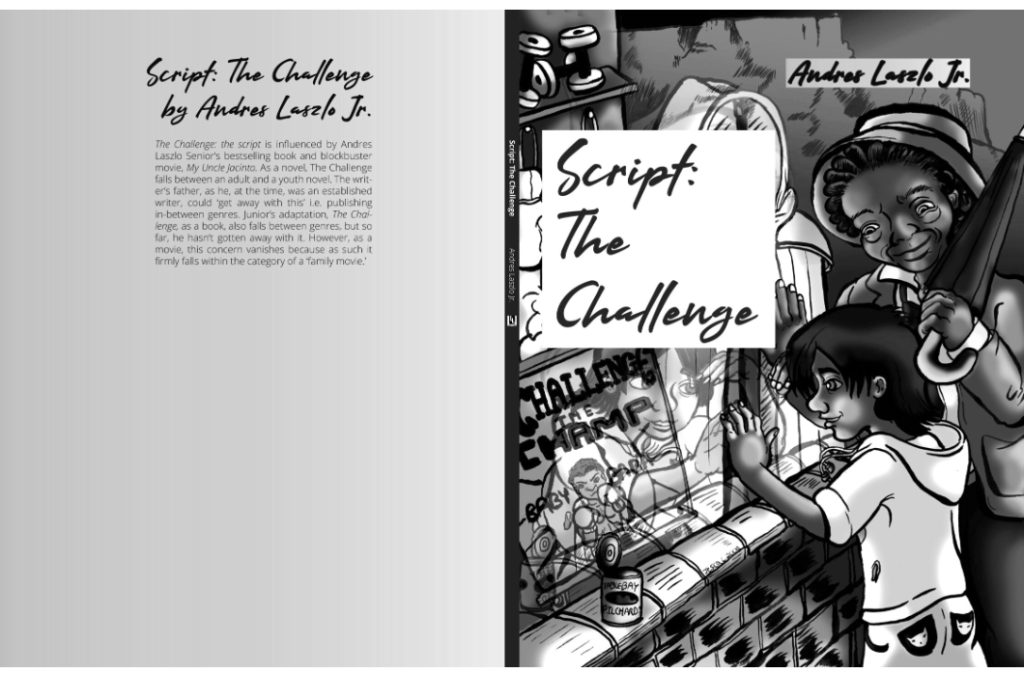
The Legacy: Inspired by the 1956 Silver Bear-winning masterpiece Mi Tío Jacinto, The Challenge is the culmination of a decades-long creative arc. It is a story born from the same “Anti-Fascist Noir” tradition that defined the 1940s Warner Bros. era—the world of Andrés Laszlo’s close friend Paul Lukas and his idol Humphrey Bogart.
The Story: Set against the high-stakes, shadow-filled world of contemporary sports and back-alley gambling, The Challenge reimagines the iconic uncle-and-nephew dynamic for a global 2026 audience. Like the “Refugees” of Casablanca, our protagonist is a man out of time, clinging to a shred of dignity in a world that has traded honor for profit.
The Production Hook: This is not a simple remake; it is a “Rights-Consolidated” evolution of an award-winning IP. With a clean Chain of Title and a script that honors the gritty, mid-century realism of the original Vajda-Laszlo collaboration, The Challenge is ready for a prestige international co-production.
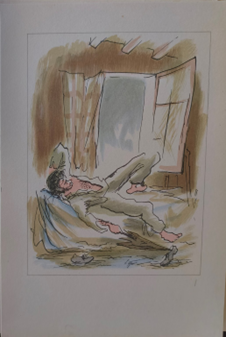
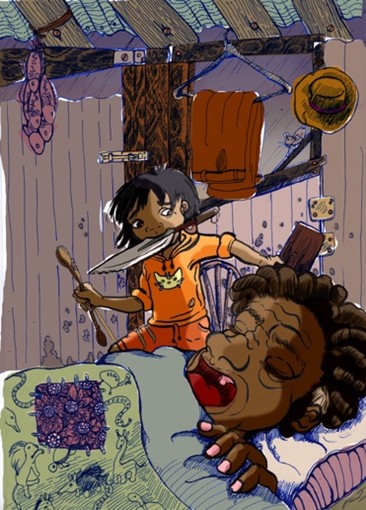
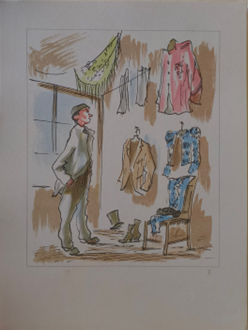
1.1. Book Illustrations
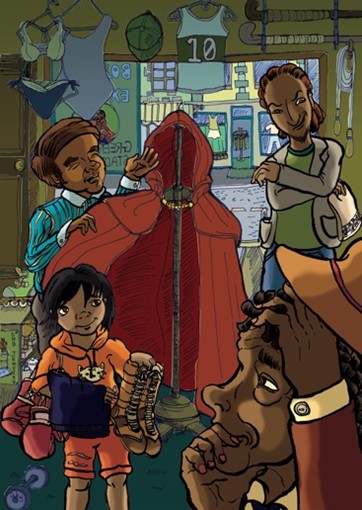
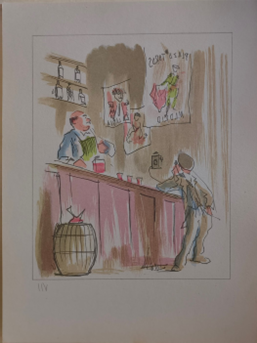
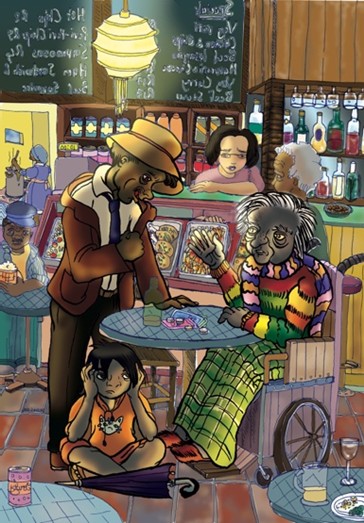
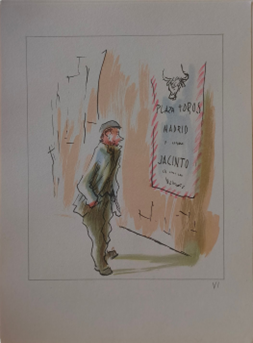
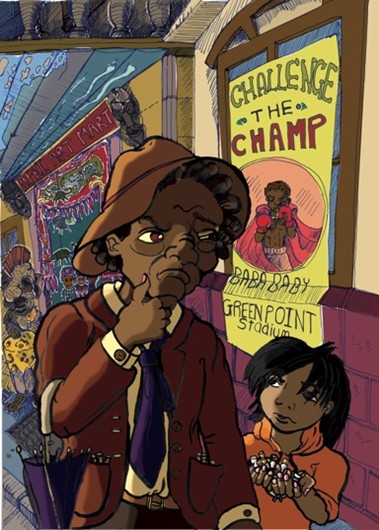
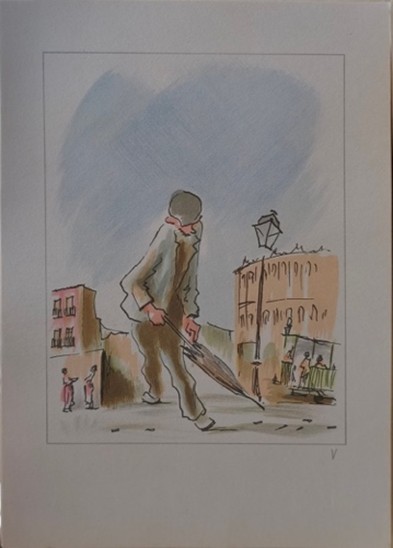
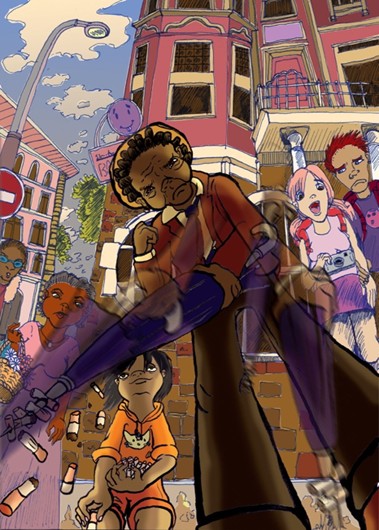
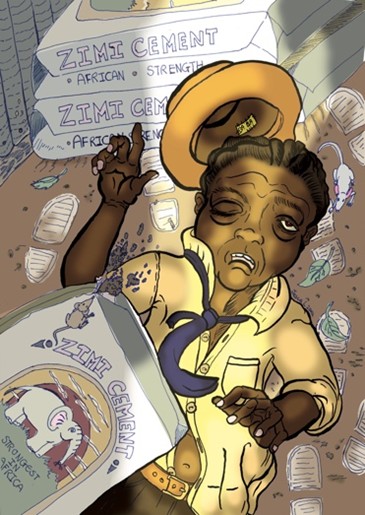
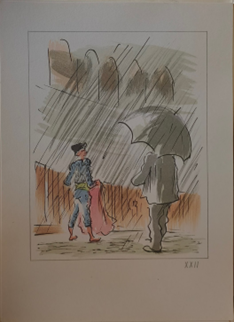
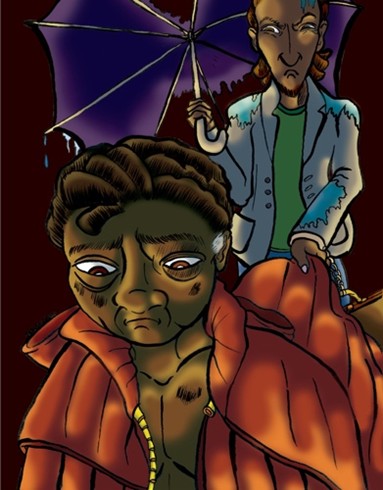
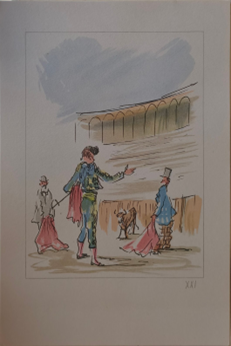
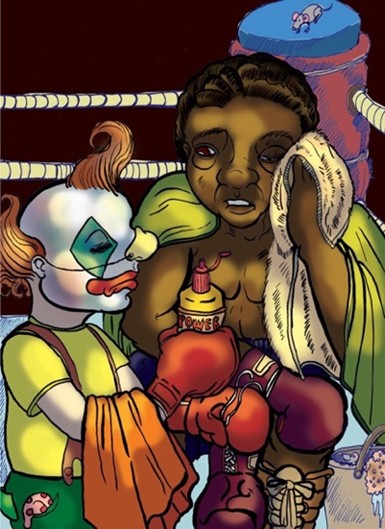
1.2. My Reimagining
1.3. The Scripts – Old and New
The Challenge: Full Production Archive.
Access to Lookbook, Chain of Title, Screenplay (English & Spanish), and illustrated books in six languages.
____________________________________________________
2. PACO: THE FATHER OF THOUSANDS
A 5-7 Episode Noir Series Adaptation
Fresh from his success with Mi Tío Jacinto—with Ladislao Vajda and Paul Lukas as his best friends, Ernst Hemingway as his best frenemy, Jenny Aspinwall Bradley as his French agent, and Jose Janés as his Spanish publisher—my father felt ready to take on the world. Paco Never Fails was a masterpiece, but to my father, it marked the end of his life as a writer, largely due to bad luck.
Paco had the power to generate life, and he used it to assist wet nurses once their milk stopped flowing. Paco el Seguro is the story of how Paco’s career comes to an untimely end; of his relationship to the women he serves, and to his wife, Maria, the only woman he has failed to grant motherhood; of how the locksmith’s apprentice from Toledo became a national hero; and of how the father of thousands (some are still living today) discovers that his wife can conceive after all, only he’s not the father. Above all, Paco Never Fails is about how his work brings him into adventure and about his ‘peña’. In addition, my father intended to make it a murder/suicide mystery, but he changed his mind; the modern adaptation restores that intended mystery.
Bad luck x 3
Andres Laszlo Sr.’s first bad luck was in part his own fault. With Mi Tío Jacinto, he had successfully gotten away with publishing ‘between genres,’ and he tried the same with Paco. He should have developed the murder-mystery angle; that way, the focus would have shifted away from Paco’s occupation.
His second misfortune was that, although ‘providing the biological guarantee for continued milk flow wet nurses’ was a well-established and recognized occupation worldwide—and although my father’s text is 100% decent—the subject matter was risqué, bordering on ‘taboo’ in Franco’s Spain.
Father’s third misfortune was that, as the book was finally adapted for audiovisual media, the wrong format was chosen: Didier Haudepin (who wanted to buy the remake rights from me) did an excellent job of it, but with the cards he had chosen to emphasize, he never stood a chance. Paco Never Fails is not for the big screen.
Then, finally, a contractual dispute prevented the movie from being exploited outside Spain.
The TV series
A movie offers insufficient time for even the best director to develop Paco’s main assets: the women and the peña. What makes Paco an audiovisual asset as a 5-7 TV installments is the 5-7 impregnation-adventures (not mainly wet nurses); the sublime 5-7-step execution of the ingenious murder plot; the 5-7 peña episodes; and the 5-7 ‘main episode events’ that the book texts offer.
The book has been retranslated into English and tilted towards ‘episodes.’
Although a major European publisher (Gallimard) has twice requested to purchase the remake rights, the Estate has retained them specifically for premium audiovisual development.
Paco: Full Production Archive.
Access to Chain of Title, and books in five languages
____________________________________________________
3. MOTHER UNKNOWN: The Movie That Died With My Father
The Logline To escape WWII, Kurt, an Austrian sculptor seeking refuge in Tangier, is “gifted” a son by an anonymous mother. As the war ends and Europe opens, his desperate search for her identity leads to a devastating psychological rollercoaster, proving that though the mother might exist, he does not.
The Vision While Ernest Hemingway mythologized the “man alone,” Andrés László Sr. used this story to deconstruct the mask of masculinity. It is the centerpiece of the Motherhood Cycle, exploring a man’s attempt to break a generational curse of “too many mothers” by finding his son’s one true mother.
The Journey
Part I: The Tangier Hub (The Golden War) Kurt survives the war through various ruses, including a “Pigeon Currency Exchange.” It is a five-year “Golden Era” of fatherhood built on shifting sands, protected by the physical walls of a world at war.
Part II: The Weight (Naples) The war ends, and the “peace” becomes the executioner. Kurt finds the first candidate, only to discover an unpayable debt and a tragedy that begins his descent into vertigo.
Part III: The Mirror (Paris) A hall of mirrors involving a psychotic deception brings him closer to the brink as he begins to lose his grip on reality.
Part IV: The Silent Wall (Avila) In the ancient, stony silence of Spain, Kurt realizes he has been a spectator in a life that was never truly his.
Why Now?
-
The Final Frontier: This is the only full-length novel by Andres Laszlo Sr. never adapted for the screen.
-
Fresh Discovery: Only now translated into English; the manuscript remains unpublished and is a primary focus of the Restoration Project.
-
The Motherhood Cycle: It stands as the psychological centerpiece of the series, exploring the deconstruction of the masculine mask in the face of anonymous motherhood.
MOTHER UNKNOWN: Full Production Archive.
Access to Chain of Title, Books in Two Languages, Father’s Synopsis, and Contract Drafts.
____________________________________________________
3. THE TALE(S) OF TWO KNAVES: A Father & Son Collection of Short Stories Covering 115 Years
This archive represents a 115-year literary dialogue between Andres Laszlo Sr. and Andres Laszlo Jr.—a Family Chronicle bridging the gap between the raw witness of the early 20th century and the architectural vision of the 21st.
The “Two Knaves” refers to the shared spirit of father and son—navigating changing fortunes, shifting borders, and political tides with wit, resilience, and a survivalist’s grace.
Every Senior entry in this vault has been meticulously remastered, translating mid-century prose into high-stakes, cinematic narratives that function as ready-to-shoot treatments.
These stories serve as a “treasure chest” for global streamers, offering a long-running franchise rooted in authentic historical upheaval, with a scope that is both epic and deeply personal.
By translating the formerly ‘only in Spanish’ and unpublished manuscripts, this Restoration Project secures a final frontier of European literature for a modern global audience.
Many of the short stories explore the “Masculine Mask,” deconstructing the complex roles knaves must play to survive in a world that demands constant, often brutal reinvention.
This is not merely a restoration of text, but a revival of a lost European perspective: Senior is sharp, cynical, and tragicomic; Junior is the more hopeful architect.
The dialogue between these two generations creates a unique narrative depth, layering historical authenticity with contemporary pacing and cinematic urgency.
With rights fully secured and Senior’s stories translated into English for the first time, the archive stands as a “turnkey” solution for producers seeking original, high-value IP.
From the high-society ruses of the “Golden Era” to the silent, stony walls of post-war Spain, the tonal range is designed for the modern “prestige TV” era.
This is a curated library of survival, mapping the movement of a bloodline through some of the most turbulent decades of human history.
“The Tales” offers a unique opportunity to acquire an entire literary universe that has been held in secret for over half a century.
This is the legacy of the Laszlo name: a century of stories, two lives of adventure, and one final, definitive cinematic journey.